
Review article
Toward developing a humanitarian crowdsourcing model: Enabling medical and disaster response through digital collaboration
DOI:
https://doi.org/10.18783/cddj.v002.i01.a01Abstract
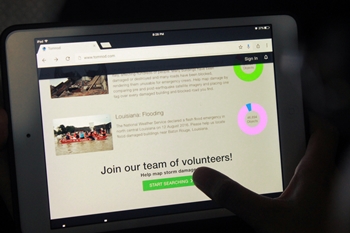
Lately, the humanitarian community has been utilizing crowdsourcing to facilitate medical and disaster response. Grounded in Geiger et al.’s (2011) Crowdsourcing Information Systems (CIS) and Suroweicki’s (2004) Wisdom of the Crowds (WC), this study content-analyzed 23 humanitarian crowdsourcing websites to find out how crowdsourcing has enabled medical and disaster response, as evident in global humanitarian movements from 2010 to 2014. Findings revealed that the digital volunteers that generate big data in humanitarian crowdsourcing websites are composed of an independent crowd with diverse opinions and a decentralized demography. The crisis-related inputs they contributed were community-based, infrastructure-based, information-based, and related to future threats. Emerging outputs resulted in three phases: 1) first degree material outputs (e.g., geographic crisis map, and/or text database/resource page); 2) non-material outputs (e.g., planning, strategizing, and operationalization via partner organizations); and 3) second degree material output (e.g., actual medical and disaster response). Results of the analysis suggest that the dynamic process of humanitarian crowdsourcing do not appear to be boxed into the CIS archetypes. Instead, the characteristic of the websites presented a merging of the four archetypes into two: 1) crowd creation and crowd solving; and 2) crowd rating and crowd processing. As an outcome of the study, a humanitarian crowdsourcing model is proposed.Downloads
Download data is not yet available.
Published
2016-11-07
Issue
Section
Review article
How to Cite
Joyce Anne Quinto, & Aldo Gavril Lim. (2016). Toward developing a humanitarian crowdsourcing model: Enabling medical and disaster response through digital collaboration. Climate, Disaster, and Development Journal, 2(1). https://doi.org/10.18783/cddj.v002.i01.a01